The history of the Egyptian cat is a tapestry woven with threads of divinity, mystery, and enduring companionship. These elegant creatures, with their lithe bodies and enigmatic eyes, have journeyed from the sacred halls of ancient temples to the sunlit windowsills of modern homes, their story inextricably linked with the very soul of human civilization along the Nile.
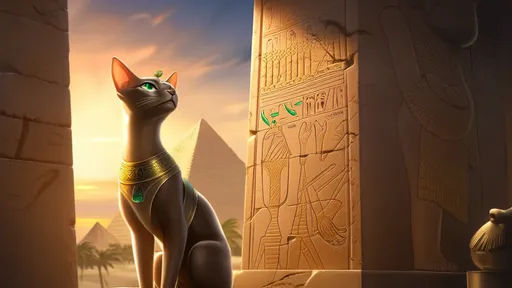
In the shimmering heat of ancient Egypt, the cat, known as "Mau," was far more than a mere animal; it was a divine entity. The goddess Bastet, depicted with the head of a lioness and later a domestic cat, was the embodiment of protection, fertility, and the gentle warmth of the sun. To harm a cat, even accidentally, was to invite severe punishment, a testament to the reverence they commanded. Households cherished their felines, adorning them with jewelry and feeding them choice foods. Upon a cat's death, the family would enter a period of profound mourning, often shaving their eyebrows as an outward sign of their grief. The ultimate honor was a sacred burial, with the beloved pet mummified and laid to rest in dedicated necropolises, its spirit prepared for the afterlife alongside its human companions.
The cat's veneration was deeply pragmatic. As agriculture flourished along the fertile banks of the Nile, vast granaries became the lifeblood of the empire. These stores were perpetually threatened by rodents, and the cat emerged as the most efficient and relentless guardian of this vital food supply. This indispensable role elevated their status from helpful hunter to protector of the kingdom's prosperity. Their keen hunting instincts also made them valuable allies in safeguarding homes from snakes and scorpions, further cementing their position as a beloved and essential member of the family and the state.
The decline of ancient Egypt did not erase the legacy of its cats. Through trade routes and the expansion of empires, particularly the Romans, these graceful animals began their journey across the globe. Phoenician traders are often credited with spreading them throughout Europe. While they lost their divine status, their practical prowess ensured their welcome in new lands. On ships and in new settlements, they continued their age-old duty as master ratters, their reputation growing wherever they went. Their exotic origin and striking appearance—often sleek, spotted, and muscular—made them prized possessions, a living remnant of a fabled and sophisticated culture.
Centuries later, the allure of the Egyptian cat experienced a powerful resurgence. The discovery of vast cat cemeteries and the exhumation of beautifully preserved mummies during the 19th and early 20th centuries captured the public's imagination during a period of "Egyptomania." This fascination sparked a desire to possess a living piece of that ancient world. This led to concerted efforts, primarily in Europe, to selectively breed domestic cats that physically resembled the felines depicted in hieroglyphics and art. The goal was to recreate the look of the Pharaonic cat: a graceful, spotted creature with a muscular build, large ears, and a curious, animated expression.
The culmination of these efforts is the modern Egyptian Mau, the only naturally spotted breed of domestic cat. The word "Mau" is itself ancient Egyptian for cat. The breed's distinctive appearance—random spots, a worried expression marked by mascara lines, and a graceful, athletic build—is a direct echo of its ancestors. Beyond its looks, the Mau is renowned for its personality: fiercely loyal, highly intelligent, and possessing a surprising turn of speed, being one of the fastest domestic cat breeds. They often form a deep, almost dog-like bond with a single person, showcasing a temperament that is both regal and deeply affectionate.
Today, the spirit of the Egyptian cat lives on in two forms. Firstly, in the carefully bred Egyptian Mau, a championed breed that serves as a direct, though modern, link to its storied past. Secondly, and perhaps more profoundly, in the millions of domestic shorthair cats around the world that carry the genetic legacy of those ancient temple guardians. The journey from god to companion is a unique one. The Egyptian cat is no longer worshipped as a deity, but it has lost none of its majesty. It is a testament to an animal that not only shaped the economy and spirituality of one of the world's greatest civilizations but also won the enduring affection of humanity, securing its place not on an altar, but forever in our hearts and homes.
By /Aug 20, 2025
By /Aug 20, 2025

By /Aug 20, 2025
By /Aug 20, 2025
By /Aug 20, 2025
By /Aug 20, 2025
By /Aug 20, 2025
By /Aug 20, 2025
By /Aug 20, 2025
By /Aug 20, 2025
By /Aug 20, 2025
By /Aug 20, 2025
By /Aug 20, 2025
By /Aug 20, 2025
By /Aug 20, 2025

By /Aug 20, 2025
By /Aug 20, 2025

By /Aug 20, 2025
By /Aug 20, 2025
By /Aug 20, 2025
